
Colorado Lawns Are Different
Most lawn care advice is written for humid Midwest or East Coast climates. Colorado is different in almost every way: low humidity, intense UV at altitude, alkaline clay soil, dramatic temperature swings, and persistent drought conditions that get worse every year. Following generic lawn care advice here will get you a dead lawn or a water bill you won't enjoy.
The good news: Colorado's climate actually works in your favor if you lean into it. Cool-season grasses thrive in the shoulder seasons (spring and fall), the dry air means fewer fungal diseases, and a well-set-up irrigation system can keep your lawn green with surprisingly little water.
Know Your Grass Type
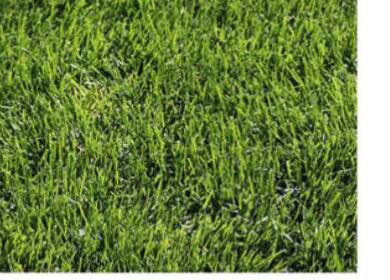
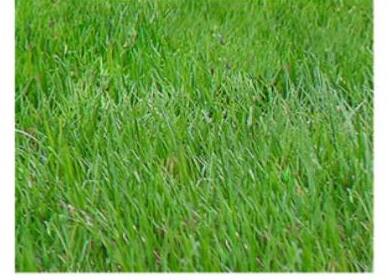
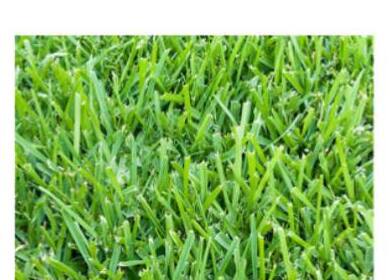
Almost all Denver metro lawns are cool-season grasses — primarily Kentucky bluegrass, tall fescue, and fine fescue blends. These grow actively in spring and fall, go semi-dormant in the heat of summer, and turn brown in winter. Understanding this cycle is the foundation of everything else.
- Kentucky Bluegrass: Most common in Colorado. Beautiful dense turf, but thirstiest grass type. Needs consistent water to stay green in summer.
- Tall Fescue: More drought-tolerant, deeper roots, stays greener in heat. Increasingly popular in water-conscious Denver neighborhoods.
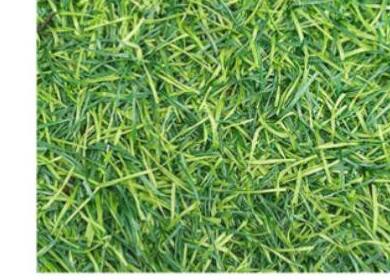
- Fine Fescue blends: Low-maintenance, low-water. Good for shaded areas and low-traffic zones.
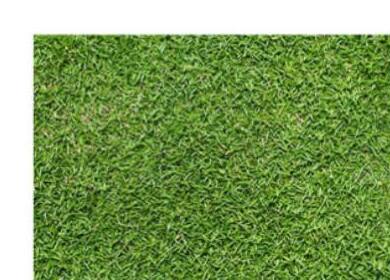
- Buffalo grass / Blue grama: Native warm-season grasses. Extremely drought-tolerant but go brown in winter. Best for xeriscape-adjacent yards.

Fertilizing Schedule for Colorado
Colorado's alkaline soil (typically pH 7.5–8.0) locks up nutrients — especially iron — making proper fertilization critical. The key rule: fertilize in fall, not just spring. Fall feeding builds root reserves that fuel spring green-up. Spring feeding alone gives you a pretty lawn that struggles by July.
🌱 Early Spring (April–May)
Light application only — 0.5–1 lb nitrogen per 1,000 sq ft. Wait until lawn actively greening. Use a slow-release formula. Do NOT fertilize during drought or water stress.
☀️ Summer (June–August)
Skip it or go minimal. Heat + nitrogen = burned lawn and disease risk. If lawn looks pale, iron supplement (chelated iron) addresses yellowing without pushing leafy growth during stress.
🍂 Early Fall (September)
Most important application of the year. 1–1.5 lb nitrogen per 1,000 sq ft. Feeds roots heading into winter, builds spring reserves. Use a balanced slow-release fertilizer.
🍁 Late Fall (October–November)
"Winterizer" application — high potassium formula. Apply before ground freezes. Builds cold hardiness and root energy. This is the secret to an early green lawn next spring.
❄️ Winter (December–March)
Nothing. Lawn is dormant. Any fertilizer applied now is wasted or runs off into storm drains. Save your money.
When and How to Water
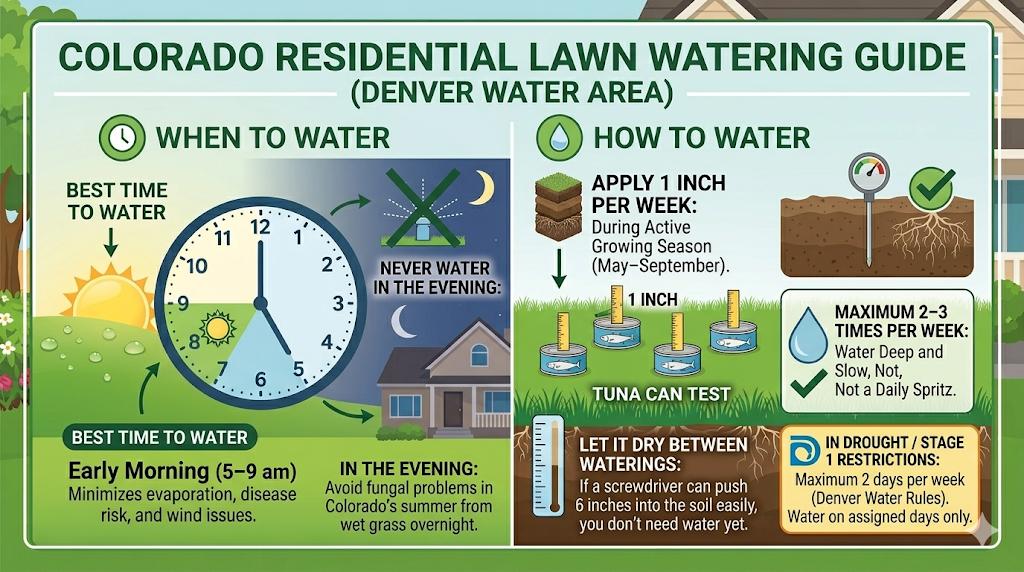
The most common lawn mistake in Colorado is watering too often and too shallowly. This trains grass roots to stay near the surface — making them dependent on frequent irrigation and vulnerable to heat and drought. The goal is deep, infrequent watering that pushes roots down 4–6 inches.
The Colorado Watering Rule of Thumb
- Apply 1 inch of water per week during active growing season (May–September)
- Water in the early morning (5–9 AM) — less evaporation, less disease risk, less wind
- Never water in the evening — wet grass overnight in Colorado's summer = fungal problems
- Water 2–3 times per week maximum — deep and slow, not daily spritz
- Let it dry between waterings — if you can push a screwdriver 6 inches into the soil easily, you don't need water yet
- In drought/Stage 1 restriction: Maximum 2 days/week per Denver Water rules. Water on your assigned days only.
Sprinkler System vs. Hand Watering — The Efficiency Truth
💦 In-Ground Sprinkler System
- Most efficient when properly calibrated
- Can apply water uniformly across the whole lawn
- Smart controllers adjust for weather and soil moisture
- Biggest waste culprit when heads are misaligned, broken, or running midday
- Typical home system: 30–50% water wasted from evaporation and runoff if not optimized
- Optimized system with drip + rotary heads: can cut outdoor water use by 30–50%
- Denver Water rebates available for smart controllers and drip conversion
🚿 Hose / Hand Watering
- More precise — you control exactly where water goes
- Good for spot watering, new seed, and garden beds
- Inconsistent coverage on lawns — hard to apply uniform 1" without measuring
- Time-consuming for large areas
- Soaker hoses and drip lines with timers = highly efficient for beds and gardens
- Better than a poorly maintained sprinkler system
- Battery timers can automate it for almost no upfront cost
Build a Cheap Automatic Watering System with Battery Timers
You don't need an in-ground system to water automatically. A battery-operated hose timer + splitter + soaker hose or sprinkler setup can cover a backyard garden, raised beds, or even a small lawn for under $100 — and it'll run on its own schedule without you touching it.
The Basic Setup
-
1
Hose Bib → Battery Timer
Screw a battery-operated hose timer directly onto your outdoor spigot. Set your schedule: time, duration, and days. No wiring, no app required for basic models. The Orbit 3-outlet digital timer lets you run up to 3 independent zones from a single spigot.
-
2
Add a Splitter for Multiple Zones
A 3-way or 4-way hose splitter lets you run separate hoses for different areas — lawn, garden beds, containers — all from the same spigot and timer. Each port has its own valve so you control flow independently.
-
3
Soaker Hose for Beds, Oscillating Sprinkler for Lawn
Connect a soaker hose (weeps water slowly at the root zone) to your garden bed zone — extremely efficient, no evaporation loss. Attach an oscillating or impact sprinkler to your lawn zone. Lay it out once, set the timer, and forget it.
-
4
Set It for Early Morning
Program the timer for 5–7 AM. Water runs, evaporates efficiently during the day, and you wake up to a watered yard. Change batteries once a season. Total system cost: $40–90 depending on coverage area.
-
5
Upgrade: Add a Rain Sensor Skip
Wireless rain sensor attachments (~$20) can connect to most battery timers and automatically skip watering cycles when it rains. Saves water and keeps you compliant with Denver Water's restrictions — you can't water when it's raining under Stage 1 rules.
Product Picks — Build Your System
Orbit 3-Outlet Programmable Digital Hose Timer
3 Independent Zones · Battery Operated · LCD Display · No Wiring Required
The Orbit 3-outlet timer is the workhorse of the DIY irrigation world. Three completely independent, programmable zones from a single spigot — you can run the lawn, garden beds, and container plants on separate schedules. Simple dial interface, holds programming when changing batteries, and has been the go-to for DIYers for years.
🛒 View on Amazon — Orbit 3-Outlet TimerOrbit 1-Outlet Single Dial Hose Timer
Single Zone · Dial-Only Setup · Battery Operated · ~$15
If you just need one zone — say, a soaker hose on your garden beds or a single sprinkler on the lawn — the single-dial Orbit timer is the cheapest entry point. No screen, just a dial. Set it, forget it. Pair with a splitter and manual valves if you want to manually switch between zones.
🛒 Search Amazon — Orbit Single Timer• 50ft soaker hose — ~$15
• Oscillating lawn sprinkler — ~$12
• 3-way hose splitter — ~$10
• Extra 25ft garden hose — ~$10
That's a fully automated system covering garden beds + lawn from one outdoor spigot. Program once, water all summer on schedule without touching it.
📹 Colorado Lawn Care — How to Water Grass in Summer
Colorado-specific guide covering watering schedules, heat stress, and keeping your lawn alive through Denver summers
Quick Reference — Colorado Lawn Calendar
- March–April: Rake thatch, first mow when grass reaches 3.5", hold off watering until mid-May in drought years
- May: Light fertilizer application, turn on sprinklers (see our sprinkler startup guide), begin regular mowing
- June–August: Water 1" per week (2x/week), mow high (3–3.5"), skip fertilizer, watch for grub activity in July
- September: Most important fertilizer application of the year, overseed thin spots, aerate if needed
- October: Winterizer fertilizer, reduce watering frequency, final mow at 2.5"
- November: Blow out sprinkler system before first hard freeze, put hose timers in garage
More Colorado Gardening Guides
Thinking About Buying or Selling?
Colorado Dream Homes helps Denver metro homeowners make smart, informed decisions about their biggest investment.
Talk to an Agent →Disclosure: Some links on this page are Amazon affiliate links. If you purchase through them, we may earn a small commission at no extra cost to you.